
Blown-In Insulation Services
Fill the gaps, stop the drafts, and keep more heat in your home with professional blown-in insulation.
Blown-in insulation is one of the fastest, most effective ways to upgrade your attic. Our installers use a blower machine to spread loose insulation evenly across your attic floor, filling gaps around joists, wires and vents that batts often miss.
We install Soprema blown-in cellulose as our preferred product, with blown-in fiberglass available when it’s the better fit.
- Even, gap-free coverage across your entire attic
- Fewer cold rooms and more even temperatures
- Can help reduce heat loss and lower heating costs

Why Blown-In Insulation Matters
Many Alberta homes lose heat through the attic.
Blown-in insulation adds the depth and coverage that thin or older insulation can’t provide.
Complete Coverage
Loose insulation flows into corners, cavities and tight spaces. It covers joists, pipes and wiring evenly, which helps reduce heat transfer through your ceiling.
Higher R-Value
R-value measures how well insulation resists heat flow. Blown-in insulation makes it easy to bring an under insulated attic up to R-50 or R-60.
Fast, Clean Installation
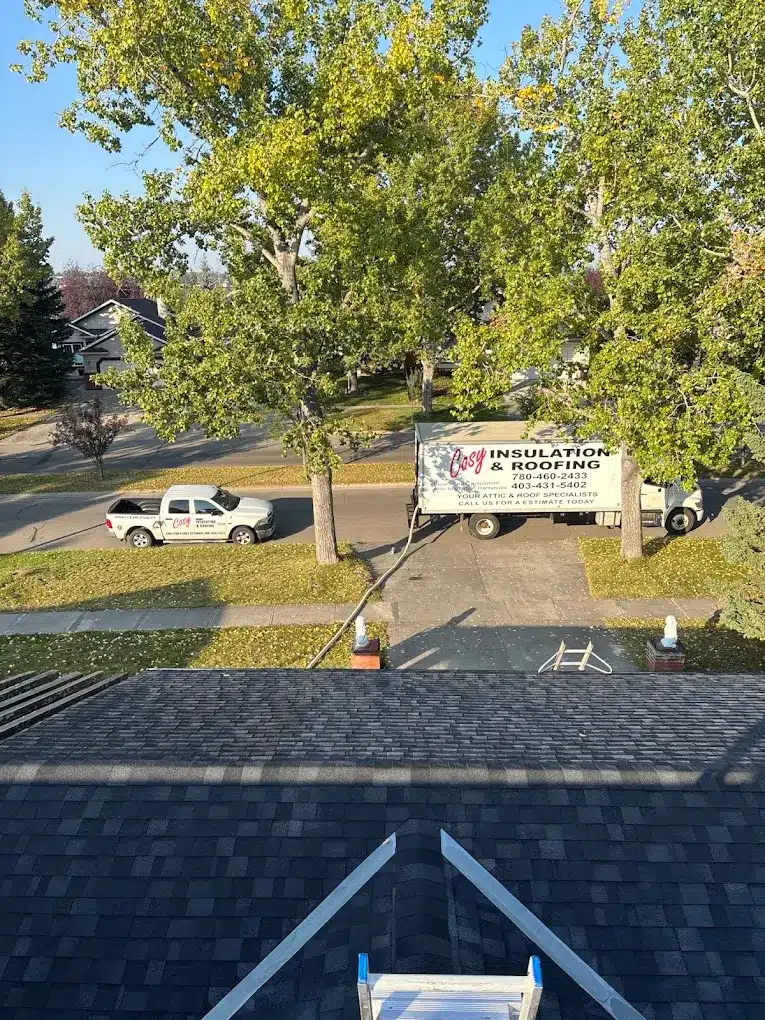
Most attics are done in a few hours. The insulation is blown through a hose from our truck, so there’s very little mess inside your home.
A Smart Comfort Upgrade
Better attic insulation can help reduce heat loss, even out room temperatures and may lower your heating and cooling costs. Results vary by home.
Our Blown-In Insulation Services
New Blown-In Attic Insulation
We prep the attic, install ventilation baffles and air seal where needed. Then we blow in cellulose or fiberglass to the right depth for your home.
Insulation Top-Ups
Older homes often have thin or settled insulation. We add blown-in insulation over what you already have to bring your attic up to R-50 or R-60.
Old Insulation Removal & Replacement
Removing old insulation is one of our specialties. We remove wet, damaged or pest-affected insulation, clean up the space and install fresh blown-in insulation.
Air Sealing & Ventilation Baffles
Insulation slows heat transfer, but it doesn’t stop air leaks. We seal gaps around lights, pipes and penetrations and install baffles to keep soffit vents clear and help manage attic condensation.
Attic Hatch Insulation & Weather Sealing
The attic hatch is a common weak spot. We insulate and weather seal your attic hatch so warm air stays in your living space.
Garages, Shops, and Commercial Spaces
We also install R-30 and R-40 insulation for garages, shops and some commercial spaces.
Blown-In Insulation Options for Every Home and Budget
We install two types of blown-in attic insulation. Our team will recommend the best fit after we look at your attic.
Blown-In Cellulose
Our preferred product is Soprema blown-in cellulose (Weathershield). Made from recycled paper treated for fire resistance, it’s dense, covers evenly and works well for most Alberta attics.
Blown-In Fiberglass
Lightweight glass fibres that resist moisture and settle very little. We install blown-in fiberglass when it’s requested or when it suits the project better.
How Blown-In Insulation Works
Blown-in insulation is installed with a blower machine, not by hand. That’s what lets it reach every corner of your attic.
- We prep the attic, install baffles and air seal gaps first
- Insulation is fed from the bag into the blower on our truck
- The machine sends it through a long hose into your attic
- Our installer spreads it evenly between and over the ceiling joists
- We blow it to a measured depth so you get the R-value you paid for


Signs Your Home Is Under Insulated
Not sure if your attic needs more insulation? Watch for these common signs.
- Uneven temperatures, with upstairs rooms colder in winter and hotter in summer
- High heating bills even with a newer furnace
- You can see the tops of your ceiling joists in the attic
- Frost or condensation in the attic, or ice dams along your roof edge
- Your home was built before 1990 and has never been topped up
Pros and Cons of Blown-In Insulation
Blown-in insulation is a great fit for most attics, but it’s worth knowing the full picture.
PROS
- Covers hard-to-reach spaces and irregular attics
- Can be added right over most existing insulation
- Quick install with minimal mess
- Cellulose uses recycled materials, a plus for sustainability
CONS
- Cellulose can settle over time, so we install extra depth to account for it
- Doesn't replace air sealing, which needs to be done separately
- Needs proper equipment and protective gear to install well
What Affects the Cost of Blown-In Insulation
Every attic is different, so every quote is too. These are the main things that affect your price.
- Size of your attic in square feet
- Target R-value and how much insulation you already have
- Type of insulation: cellulose or fiberglass
- Whether old insulation needs to be removed first
- Ventilation needs, air sealing and attic prep
- How easy your attic is to access

Our Blown-In Insulation Process
From your first call to the final cleanup, here’s what to expect.
- Free in-home estimate and attic inspection
- Clear quote with no pressure or upselling
- Protect your home with drop sheets and plastic
- Prep the attic, install baffles and air seal gaps
- Insulate and weather seal the attic hatch if needed
- Blow in insulation to the agreed depth
- Clean up and walk you through the finished work
Why Choose Us for Your Blown-In Insulation
Honest advice, clean work, and results you can feel in every room.
We’re a local Alberta company that has specialized in attic insulation since 1992. We’ll tell you what your home actually needs, and nothing more.
- Over three decades of attic insulation experience
- Attic insulation upgrades and old insulation removal
- Quality Soprema blown-in cellulose, plus blown-in fiberglass
- Baffles, attic prep and air sealing done right
- Attic hatch insulation and weather sealing
- Clean, respectful installation with full cleanup
- CEIP Qualified Contractor

 Trustindex verifies that the original source of the review is Google.

 Trustindex verifies that the original source of the review is Google.
 Trustindex verifies that the original source of the review is Google.
 Trustindex verifies that the original source of the review is Google.
 Trustindex verifies that the original source of the review is Google.
 Trustindex verifies that the original source of the review is Google.
 Trustindex verifies that the original source of the review is Google.
 Trustindex verifies that the original source of the review is Google.
 Trustindex verifies that the original source of the review is Google.
 Trustindex verifies that the original source of the review is Google.

Areas we serve
Blown-In Insulation FAQs
Got questions? Here are the answers we share with homeowners most often.
Blown-in insulation, also called loose fill, is small pieces of cellulose or fiberglass. A blower machine sends it through a hose to cover your attic floor evenly and fill gaps between joists.
Yes. “Loose fill” describes the material and “blown-in” describes how it’s installed. Both terms refer to the same type of attic insulation.
Both work well when installed properly. Soprema blown-in cellulose is our preferred product for most attics, and we install fiberglass when it’s requested or suits the project better.
We recommend R-50 or R-60 for most Alberta attics. With cellulose, R-50 is about 16 inches and R-60 is about 20 inches, depending on product specifications. Fiberglass depths vary by manufacturer.
For garages, shops and some commercial spaces, we also install R-30 and R-40.
Yes, in most cases. If the old insulation is dry and in good shape, we can add more on top. If it’s wet or damaged, we’ll recommend removing it first.
Cellulose settles a little over the first year or so. We install extra depth so your attic still meets its target R-value after it settles.
Yes. Cellulose is treated with fire retardants, and fiberglass is naturally non-combustible.
No. Insulation reduces heat transfer, but it doesn’t stop air leaks. That’s why we air seal gaps and install baffles before we insulate.
Some homeowners rent a blower machine from a hardware store. It’s dusty work that needs protective gear and two people, and it’s easy to end up with thin spots. A professional installer gets you even coverage and proper attic prep.
Most attics take just a few hours. Larger jobs, or ones that need insulation removed first, may take a full day.
It can. Upgrading attic insulation can help reduce heat loss, improve comfort and potentially lower heating and cooling costs. Actual savings depend on your current insulation, air leakage, heating system and home.
Cosy Insulation & Roofing is a participating Clean Energy Improvement Program (CEIP) contractor. Eligible homeowners may be able to finance qualifying attic insulation upgrades through the program. Financing is subject to program availability, municipal participation and homeowner approval.